
Calibration vs Verification: Key differences according to the VIM
It is a problem to confuse these terms in your operation, as traceability, compliance, and quality are directly impacted. For this, there is an international standard in which both concepts are clearly defined and are not interchangeable:
Calibration does not guarantee compliance, and verificationdoes not generate traceability.
Factor | Calibration (VIM 2.39) | Verification (VIM 2.44) |
Goal | Metrological relationship | Compliance |
Results | Data + uncertainty | OK / Not OK |
Type of results | Quantitative | Qualitative |
Traceability | Is stablished | It's used |
Typical use: | Laboratory | Production/QTY |
What is calibration?
An operation that establishes a relationship between reference values (with uncertainty) and the indications of an instrument, to obtain reliable measurement results.
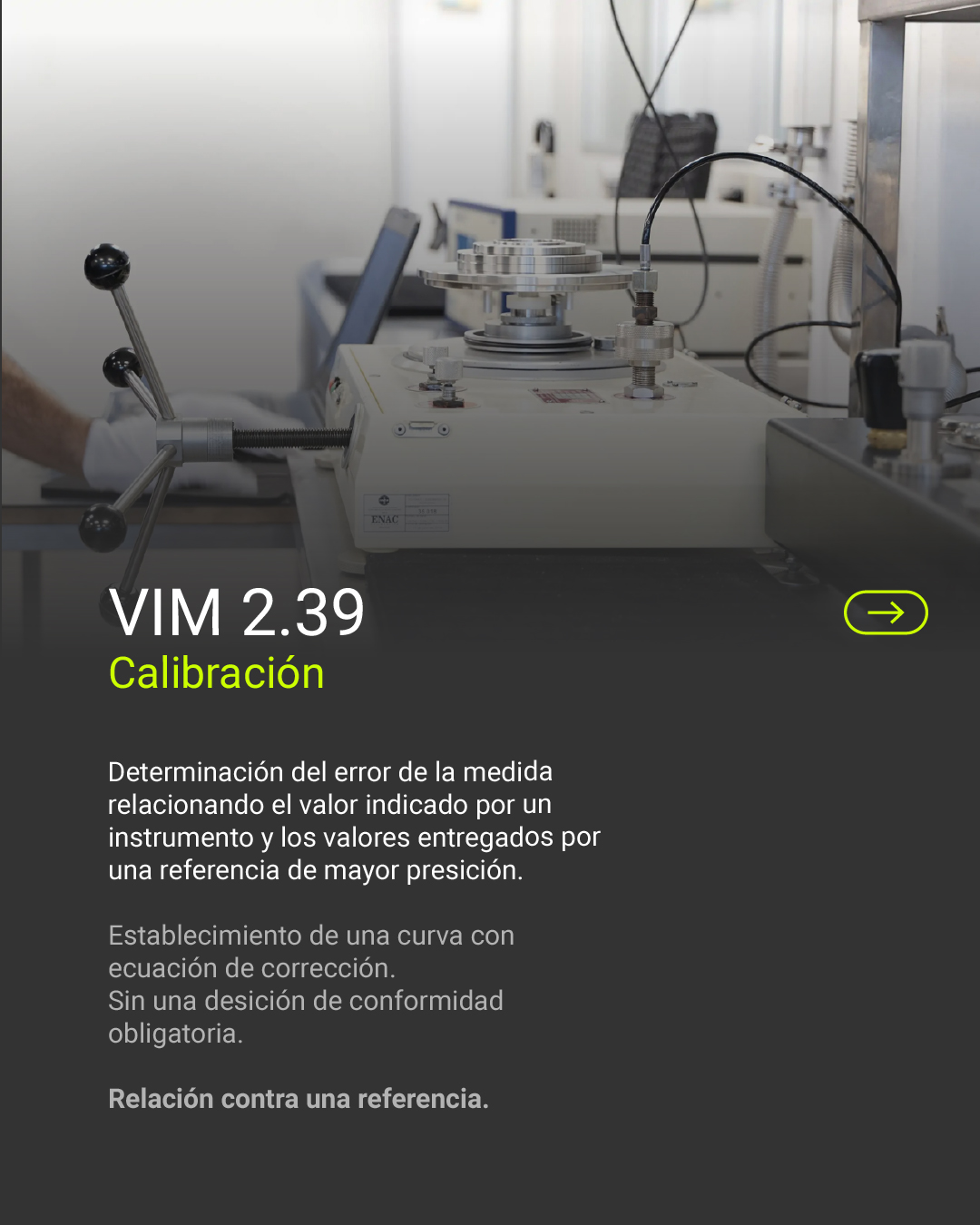
In practice, it is not reduced to an "Ok" or "Not ok" because calibrations generate data (curve, correction, uncertainty) that builds metrological traceability, allowing for the quantification of error. In simple terms, calibration answers "How well does my equipment measure?"
What is verification?
The provision of objective evidence that an item meets specific requirements.
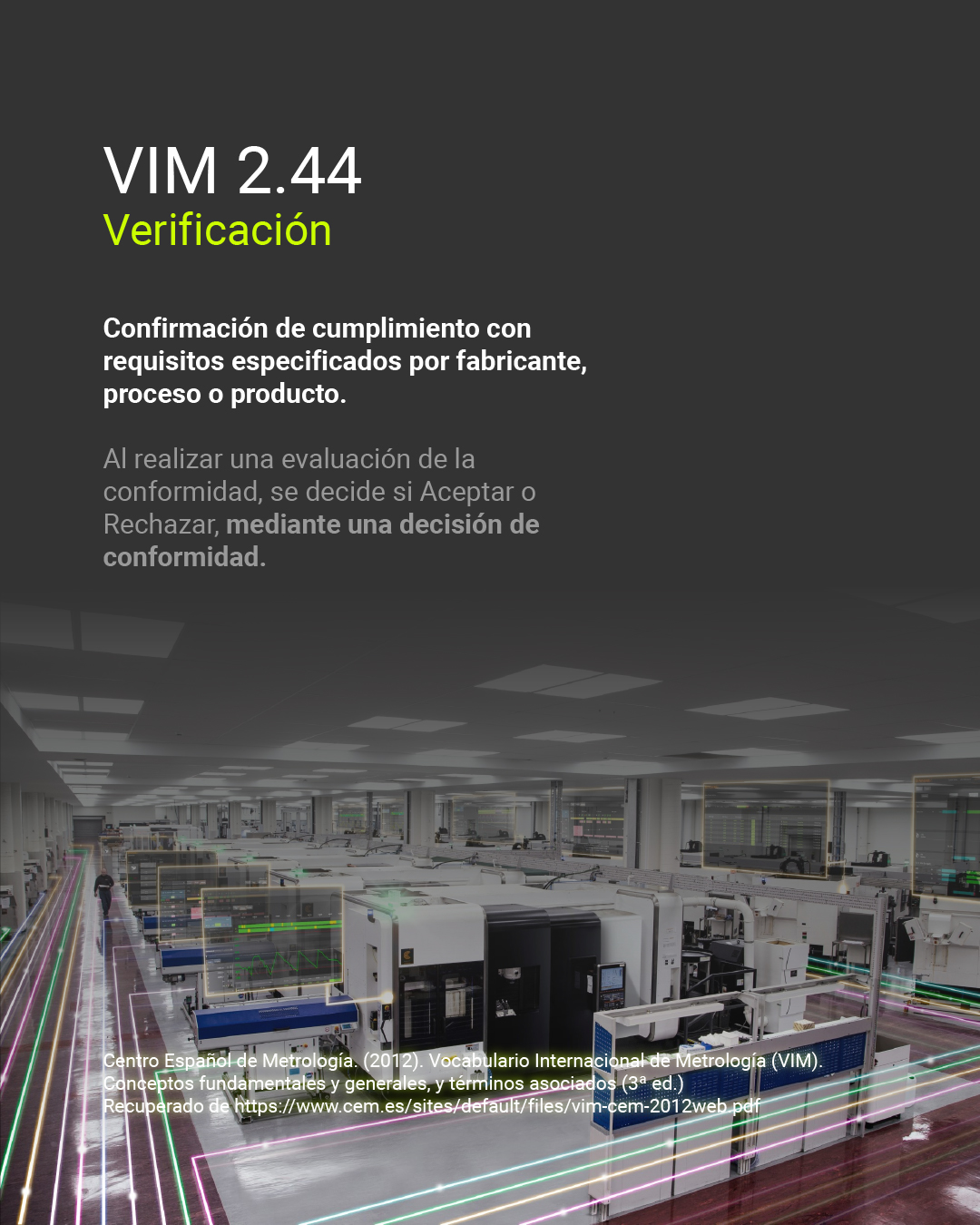
Verification is an evaluation of conformity, which yields a binary result: "does my instrument comply or not".
It uses data (which mostly comes from calibration) and is aligned with specific tolerances.